From a studio in Madrid, an obsession with two things: 3D, and the things well made.
Eskultura is a one-person studio in Madrid building 3D assets for Unreal Engine archviz the way a good carpenter builds a chair — one piece at a time, fully, with care for the parts no one sees.
Las cosas bien hechas.
There’s a phrase you hear a lot in Madrid: las cosas bien hechas— the things well made. It isn’t nostalgia. It’s a way of working. The carpenter who shapes a chair leg as if no one will ever see the joint. The cook who finishes a sauce because finishing matters. The typesetter who kerns one letter for ten minutes because the page deserves it.
I grew up around that idea. Then I spent years working in archviz — rendering apartments for developers, kitchens for brands, hotels for architects. And every project hit the same wall: the libraries we relied on were the opposite of bien hechas. Ports from 3ds Max pushed through converters. Materials half-broken. Scale guessed at. Topology that fought back when you tried to use it.
So I started making my own. One model at a time, fully. In Unreal, for Unreal. Tested in real scenes before release. I shared them on Patreon, and the people who picked them up were artists like me — archviz studios, freelancers, designers who knew what “production-ready” actually means.
Eskultura is what that became. A studio in Madrid, building one library of 3D assets the way we’d build anything else worth keeping. The point isn’t volume. The point is care.
Four steps from reference to production.
Every piece in the library goes through the same process. No corner cutting.
Research
Study the reference. Real furniture, real proportions. Mid-century catalogs, contemporary makers, archival drawings.
Model
Build directly with Unreal in mind. Topology designed for Nanite, scale checked against real-world dimensions.
Optimize
PBR materials baked and tested. LODs where it matters. Pivot points where they should be. Files lean.
Ship
Test in a real archviz scene before release. If it doesn't drag-and-drop and look right, it goes back to step 02.
Built where you’ll use it.
I don’t model in Blender and convert to UE. I don’t sculpt in ZBrush and “hope it works”. The work happens inside Unreal Engine, in scenes that look like the scenes you’ll drop these models into.
That means materials are tuned with the real lighting setup. Topology is checked with Nanite enabled. Scale is validated with a human reference next to every piece. The chair you download is the chair I rendered.
- Modeled in UE 5.4+ from the first vertex
- Tested in production archviz scenes
- Nanite-enabled topology, sensible LODs
- Real-world scale, predictable pivots
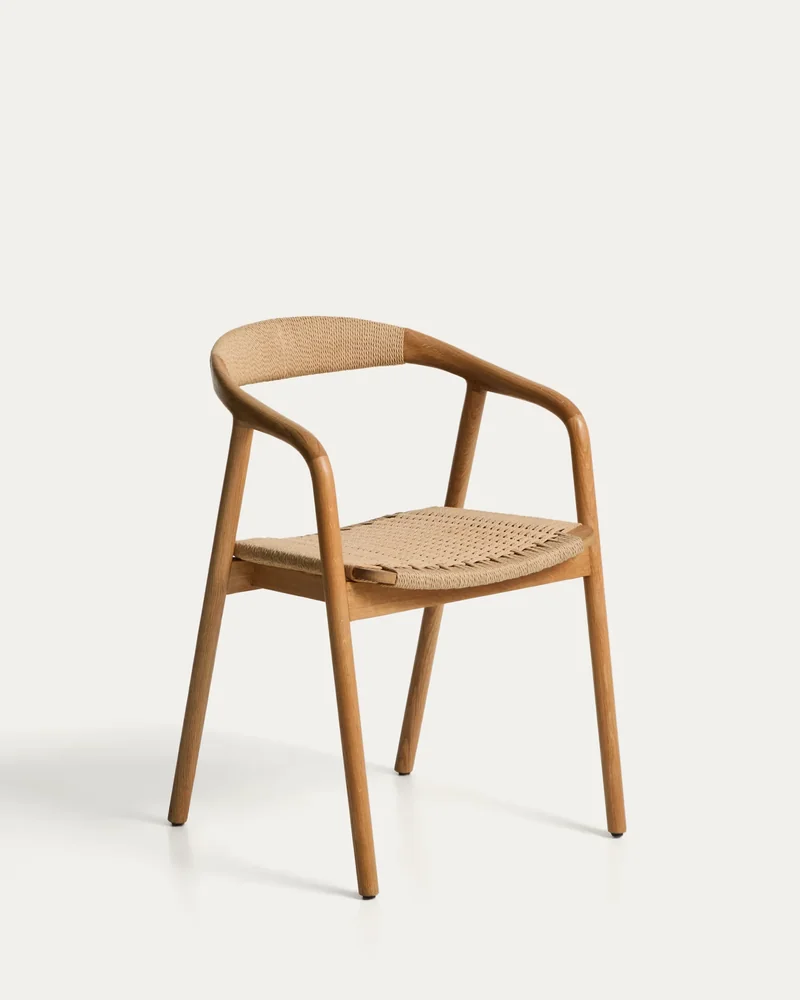
One person.
One library.
From Madrid.
I’m Jesús. I work and live in Madrid. I’ve spent years in 3D — first inside studios, then on my own as an archviz artist for architects and developers. I’ve rendered too many apartments, too many kitchens, too many hotels, and somewhere in there I started building the asset library I always wished existed.
Eskultura is intentionally a one-person studio. Every model is built by me. Every release ships when I think it’s ready, not when a roadmap says it should be.
That’s the deal. You won’t get a catalog of 10,000 mediocre props. You’ll get a curated, growing library where every piece earned its place. New models drop weekly when there’s something worth dropping. Sometimes the week skips. That’s the trade-off of doing it well — and I’d rather you wait a week than ship something I wouldn’t use myself.
If you want to see how this started, the Patreon and Ko-fi accounts below are still active — they’re where Eskultura grew. The website you’re reading right now is the next step: the studio’s own home.
Eskultura didn’t start here.
Before the studio had its own home, it lived on creator platforms. Models shipped, artists used them, the library grew. Here’s where it has been.
What we say yes to.
What we say no to.
Six rules that decide what gets built, what gets shipped, and what gets thrown out.
Quality over quantity
Better six pieces a month than sixty. Curation is the whole point.
Unreal-first, always
Every model is born in UE. Other formats are exports, not the source of truth.
Real-world scale
A chair is 79 cm tall. A coffee table is 40 cm. Always. No “approximately”.
Test before release
If a piece doesn't survive a real archviz scene, it doesn't ship.
Cancel anytime
No contracts. No dark patterns. Subscribers leave whenever they want.
Made by an artist
Decisions get made by someone who ships archviz, not by a growth team.
Now you know the story.
Want to try the library?
Eight pieces, free. No card. No catch.